APV Codec
Advanced Professional Video Codec

Before we begin, I recommend reading: Encoding vs. Transcoding
APV Codec - Introduction
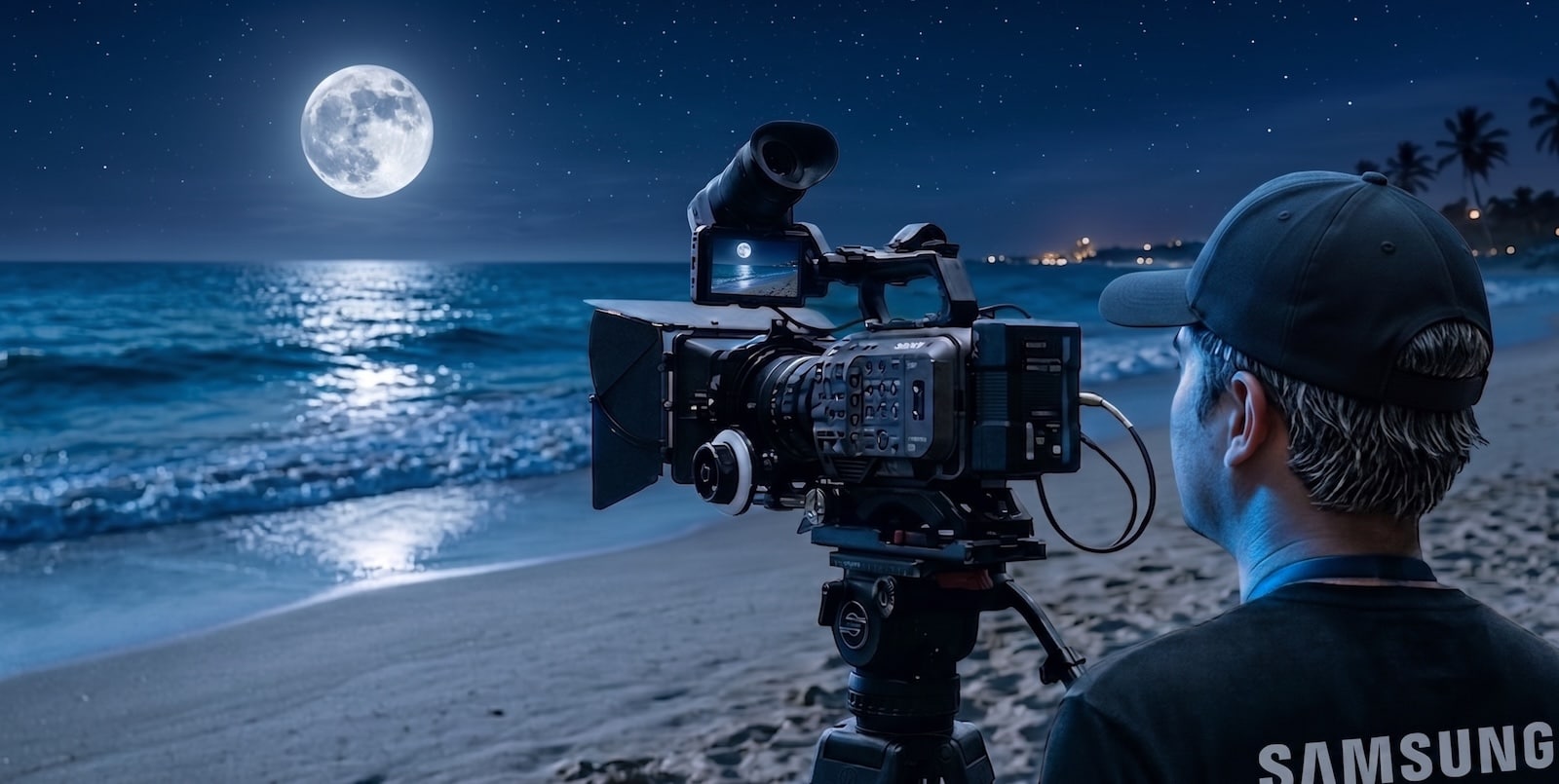
APV (Advanced Professional Video Codec) is a royalty-free, open-source video codec developed by Samsung. Primarily designed for mezzanine/contribution video use-cases. Directly rivals Apple’s ProRes codec.
Apple ProRes is in a line of editing/intermediate codecs which are used for video editing. Usually these codecs are intra-frame only, each frame is independent and can be decoded without any dependencies.
APV rivals ProRes with further enhancements while retaining some of the core capabilities that a contribution/intermediate codec is expected to have.
Why use an Intermediate/Contribution Codec?
These are professional video codecs designed for high-quality outputs that are visually lossless. These codecs are used to store a “mezzanine” copy of a source video for later encoding and transcoding. In the digital world, a mezzanine file acts just like the original film negative from a movie studio.
Imagine a great movie from the 1990s that was released on DVD in the early 2000s, then received a 1080p Blu-ray release a decade ago, and finally a 4K Blu-ray release a few months ago. All of these subsequent releases are generally rescanned from the original 35mm film negatives. By going back to that high-quality, uncompressed source material, studios can extract maximum detail and apply new enhancements for every new format iteration. Mezzanine codecs serve this exact same archival purpose for modern digital video.
How are these codecs (ProRes, APV etc.) different from popular codecs such as H.264, AV1 etc.
The H.264s, 265s, AV1s etc. are consumption codecs that are primarily used for last mile delivery of videos over internet or over a physical medium such as DVD, Blu-ray disks etc. These codecs naturally prioritize low file sizes for various reasons such as internet bandwidth limitations, disk size limitations etc.
In contrast, contribution codecs like APV and ProRes prioritize quality over file size, as they are generally used for professional video editing and re-transcodes for future releases etc.
Consumption codecs use inter-frame compression to maximize byte savings - do not store a full copy of every frame. There is always an independent/full frame (I-frame) which is used to begin decoding followed by partial (P/B) frames. The partial frames generally store the scene changes from one frame to another thus saving bandwidth.
Contribution codecs (like APV/ProRes) use intra-frame compression, they store every single video frame as a complete, independent image with zero data dependency on the frames before or after it. To visualize how this works, think of the nostalgic cricket flipbooks from the ’80s and ’90s. Just as a flipbook creates the illusion of motion by rapidly flashing a series of standalone, full-page images, these codecs process video by simply playing back a sequence of whole, uncompromised pictures.
Video Source: Reddit user - kaisadusht
Apple introduced ProRes starting with the iPhone 13 Pro to capture high-quality camera videos. Meanwhile, Android devices have supported their own high-quality formats, such as Log, RAW, and high-bitrate 10-bit HEVC. Now, Samsung has introduced the APV codec on its Galaxy S26 Ultra to directly rival ProRes for professional-grade video capture.
Typically, studios shoot in RAW and store the original files in an ‘archive vault.’ They edit using lightweight proxies, conform back to the RAW for the final color grade, and then export a pristine 444 mezzanine file (like ProRes 4444). This mezzanine master is then used to generate everything else, from theatrical releases to streaming files.
In a nutshell, contribution codecs take up a lot of space, running into a few Gbps while consumption codecs are generally much smaller, a few Mbps. Each serves an entirely different purpose in the video pipeline.
Key Features of APV:
- Intra-frame: Each frame is independently encoded.
- Resolutions: Up to 8K video resolution is supported.
- Chroma subsampling support: 4:0:0, 4:2:2, 4:4:4, and 4:4:4:4.
- Bit depth: 10 to 16 bits.
Are there any key benefits over Apple ProRes?
Yes! Certainly.
- Open-standard: APV is designed to be open-source unlike ProRes which is proprietary to Apple.
- Royalty-free: APV is royalty-free unlike ProRes which requires licensing fees to Apple for implementation.
- Better Compression: APV claims to reduce file sizes by ~20% while retaining similar perceptual quality levels, provides additional support for chroma 4:0:0. I plan to run a practical comparison in a future blog post between these 2 codecs.
This concludes today’s post. Thank you for reading.