1980s: Nintendo and Video Game Piracy
Rise of video game piracy

Nintendo: The Undisputed King
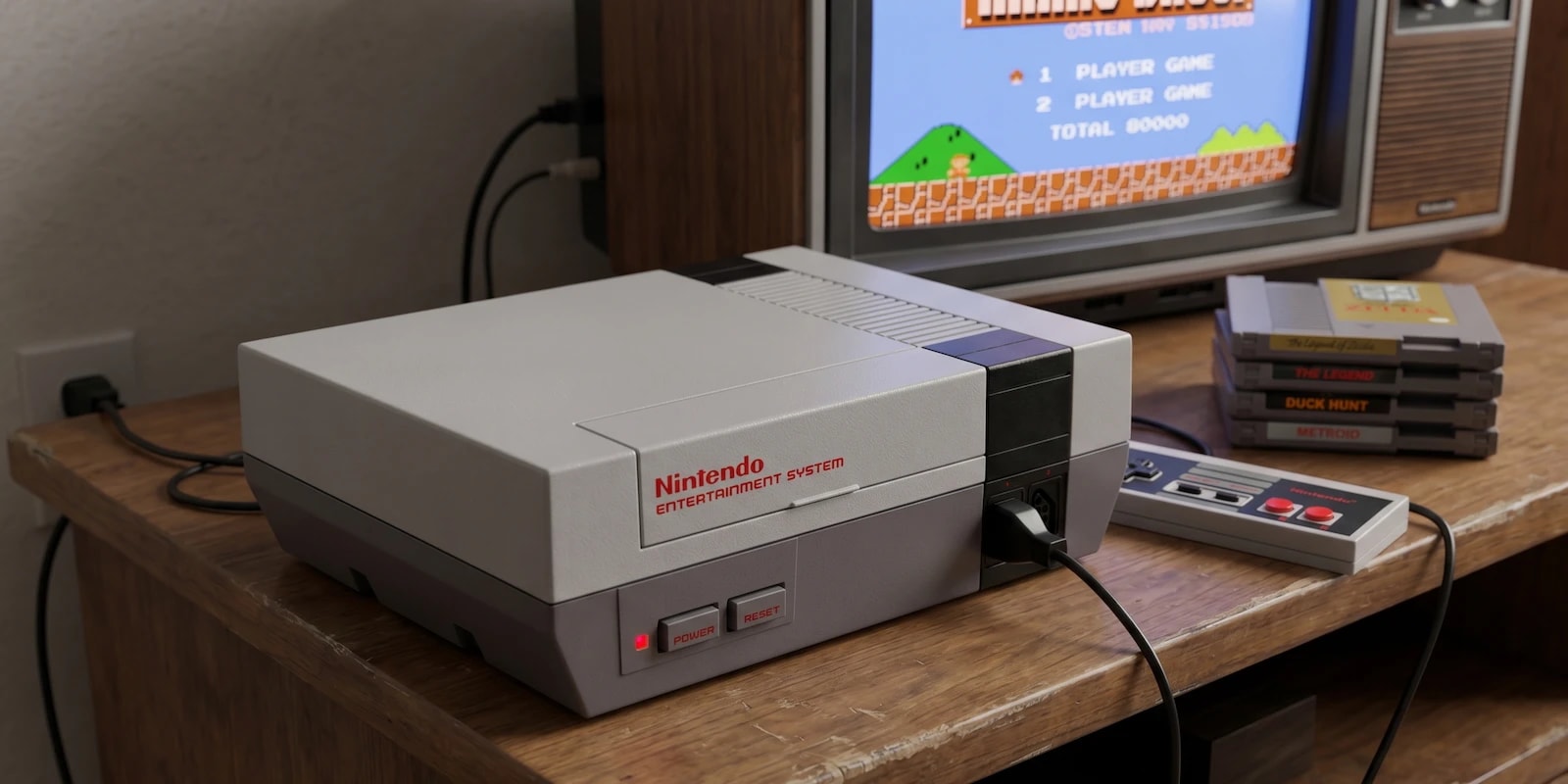
Nintendo released its first home console, the 8-bit Famicom (known as the NES globally), between 1983 and 1986 during unprecedented times. The video game industry was suffering through a devastating recession due to the crash of 1983. This crash was triggered by a perfect storm of market saturation and poor-quality titles, compounded by the rising popularity of personal computers.
The Numbers: The video game industry’s revenues plummeted from $3 billion in 1983 to a mere $100 million in 1985. Nintendo entered this incredibly fragile, turbulent market and ultimately became the savior of the entire video game ecosystem, dominating the industry for the subsequent decade.
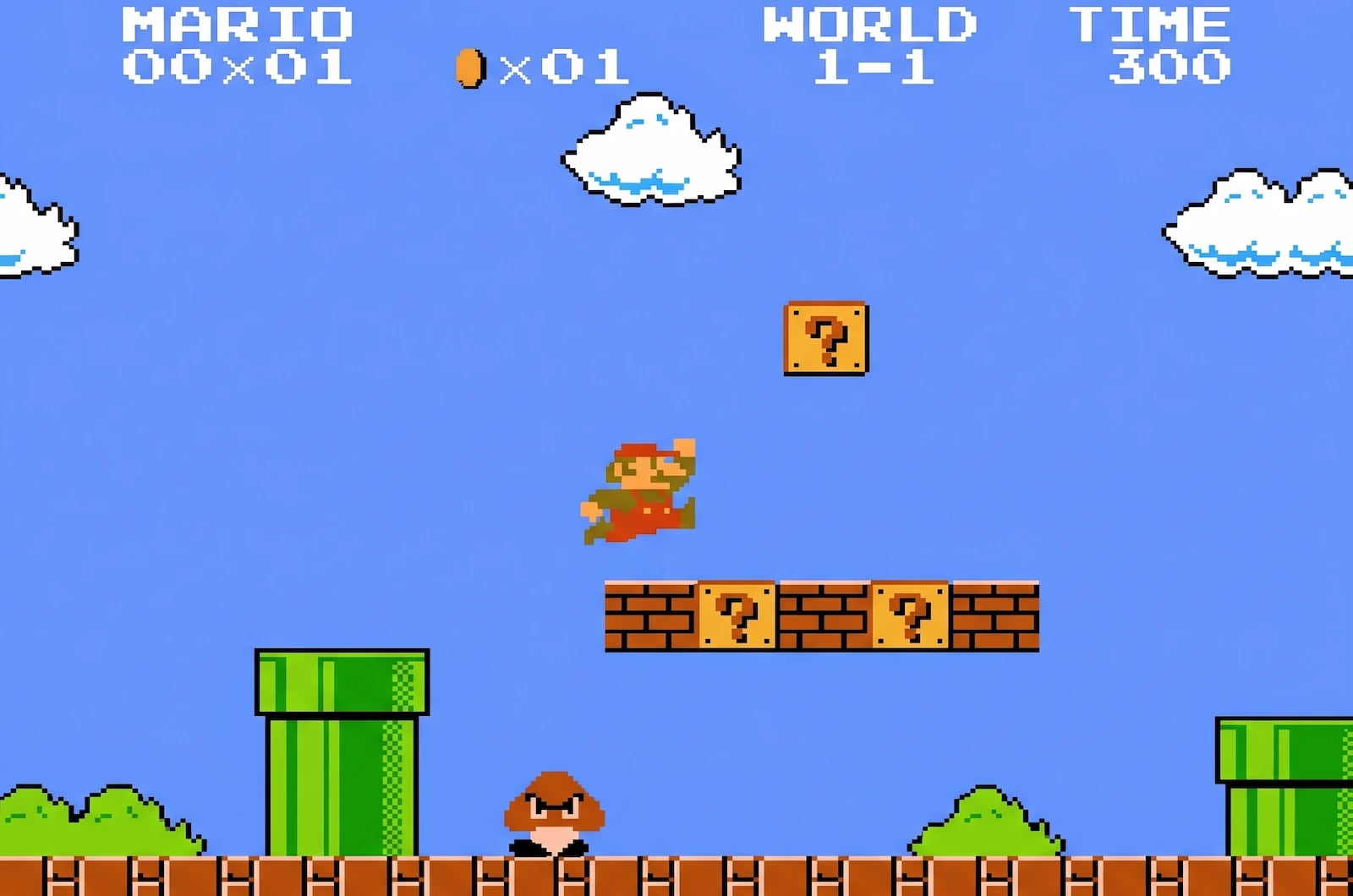
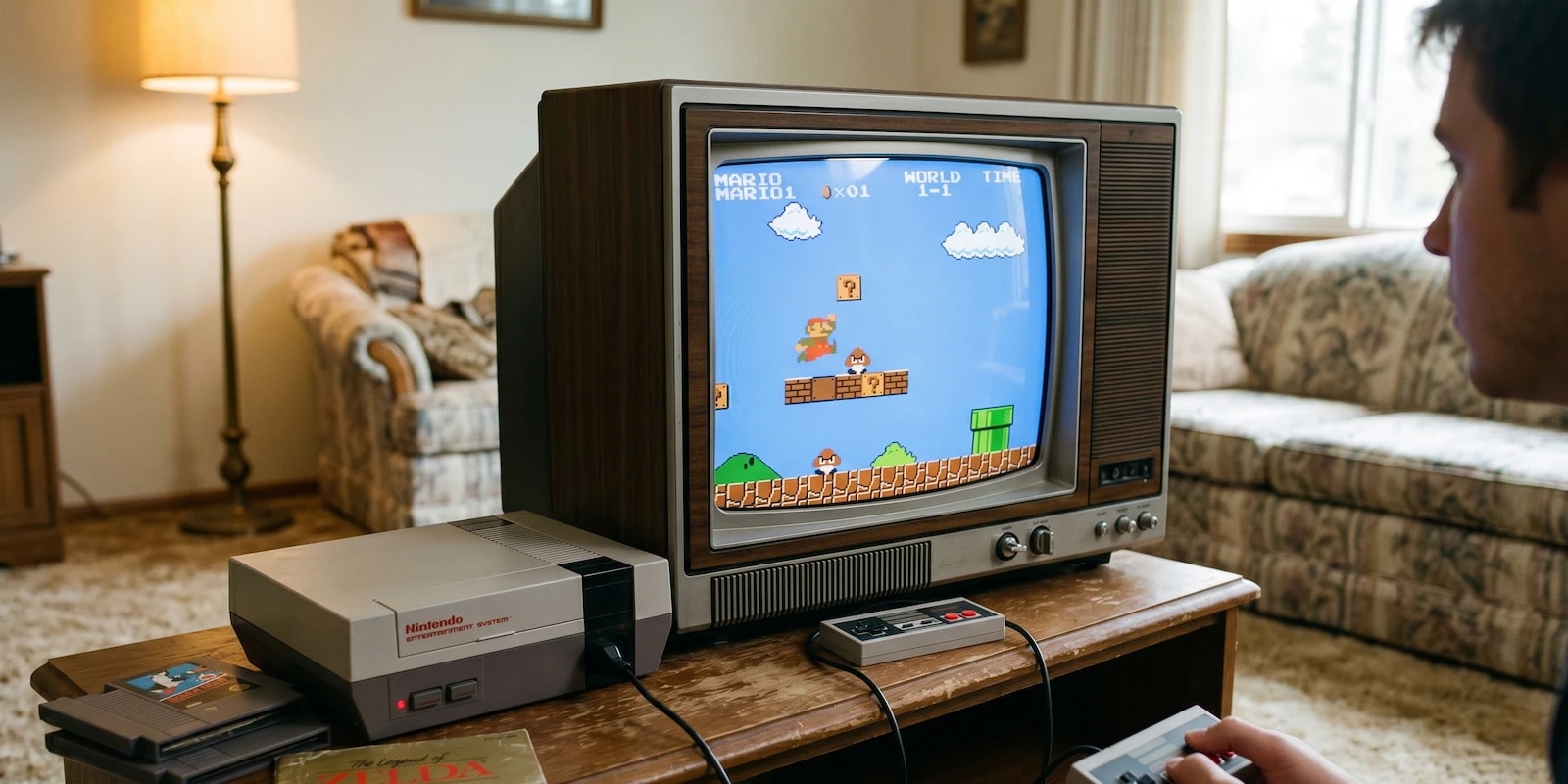
During this era, the Japanese company published titles that would achieve legendary status. One of the biggest names, of course, was the Mario Brothers hence the main picture for this blog as an ode to Mario’s enduring popularity. Nintendo sold millions of units, becoming the undisputed king of video game consoles throughout the mid-80s and 90s.

NES/Famicom Specs:
- CPU: 1.79 Mhz
- Memory: 2KB
- Resolution: 256 x 240 pixels
8-bit Era
The classic games of the 80s and 90s ran on an 8-bit CPU, hence the name. Due to limited computational power, these consoles processed data in small chunks, meaning they could only handle numerical values from 0 to 255 at a given time. Furthermore, the NES was heavily restricted graphically; it had a master palette of roughly 56 colors and could typically display only 25 colors on screen at once.
If you revisit these retro consoles today, they look blocky and pixelated compared to the advancements in video game technology over the last 40 years. However, remember that these 8-bit games were groundbreaking back then. Technology evolves so rapidly that looking back even a single decade reveals massive leaps. Today’s AI boom makes tech from just ten years ago feel outdated, but viewing history through the right lens allows us to appreciate the tech of every era. By understanding that context, we can recognize that the strict limitations of 8-bit gaming actually paved the way for everything we’ve achieved today and where we’re headed next.
Piracy: The Grand Old Problem
Did piracy exist back then, too? Emphatically, yes. Pirates always find a way to co-exist with technology when there is money to be made, and back then, the video game market was red-hot.
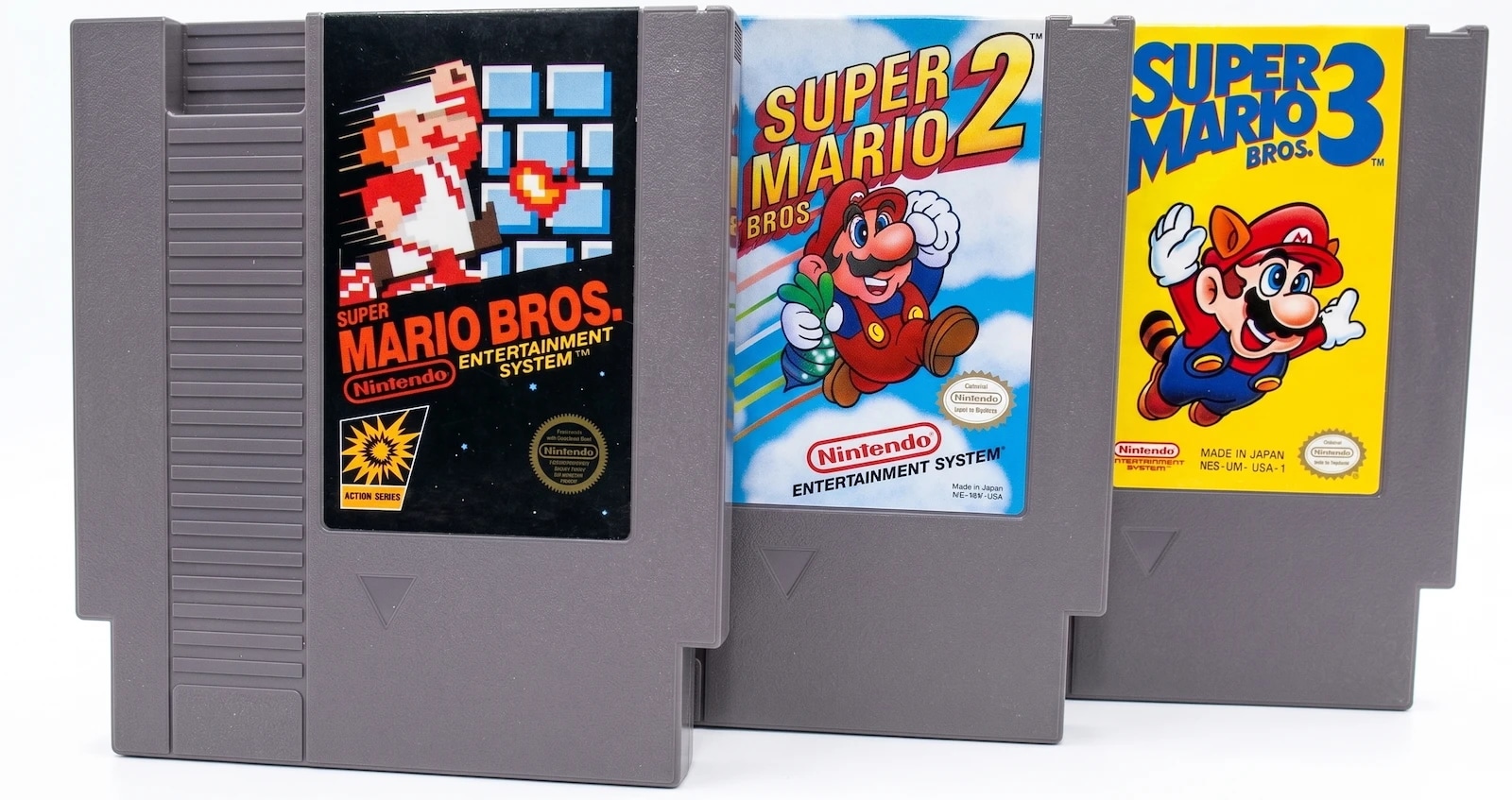
Nintendo used a proprietary Mask ROM technology for their game cartridges. The core capabilities of these cartridges included:
- Read-only architecture: Designed specifically to ensure no one could copy or alter the game data.
- Split storage: These chips featured Program (PRG) ROM and Character (CHR) ROM to independently store the video game code/logic and the graphics data.
- Battery backups: Certain complex games leveraged an SRAM chip (backed by a watch battery) to save player data.
Even in the 80s, Nintendo was actively employing physical copy protection techniques to mitigate illegitimate attempts at extracting game files from their Mask ROM cartridges.
How Did Pirates Break the NES Protections?
Pirates utilized a variety of ingenious techniques to bypass Nintendo’s security and manufacture bootleg copies:
- Copiers: These hardware devices connected directly to the NES/Famicom’s cartridge slot. Users would insert the original cartridge, and the copier would intercept the ROM data and dump it onto a standard floppy disk.
- EPROM Programmer: Pirates would remove the Mask ROM chips and insert it into an EPROM programming device to read the raw data.
- Cheap Alternatives: Because true Mask ROM technology was expensive to manufacture, pirates would burn the stolen game data onto cheap, readily available EPROM or Flash chips.
- Breaking Hardware Protection:
Voltage Break: Nintendo installed CIC (Checking and Interlocking) circuits to detect fake/cloned cartridges and would reset with a blank screen. Pirates found the precise voltage pulse to temporarily stop the lock chip from functioning thus allowing these games to boot.
Stacked Cartridges: Pirates would install a licensed caritridge into one slot while the pirated cartridge occupied the other slot. With this technique pirates found a way to send security checks to the licensed cartridge while loading game data from the pirated cartridge.
CIC clones: Eventually, bootleggers and unlicensed publishers successfully reverse-engineered Nintendo’s lock chip, creating their own cost-effective CIC clones. This jailbreak technique was the most advanced method of defeating Nintendo’s hardware DRM.
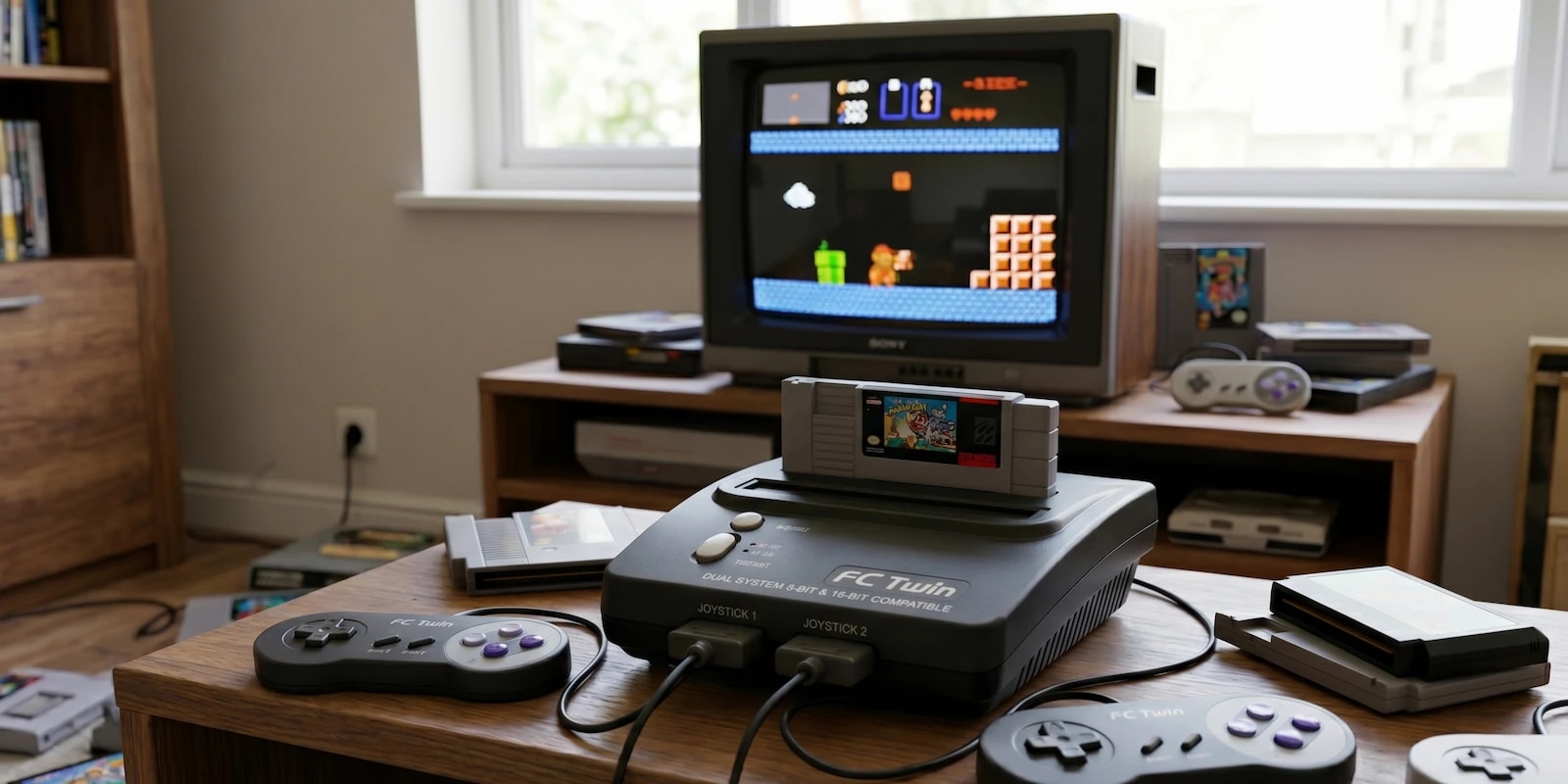
Cheap Clones (Famiclone): Alongside pirated games came hardware clones of the console itself. These replicas, primarily originating in China and Taiwan, could play Famicom/NES games out of the box. They enjoyed widespread popularity in developing economies across India, Pakistan, Eastern Europe, and Latin America. These clone consoles were often sold side-by-side with original Nintendo systems, but at a fraction of the price.
The FC Twin is just one of many such clones released during the height of the 8-bit craze.
The Ultimate Irony
In many countries, Nintendo gained a massive brand presence entirely because of these illegal clones. Famiclones introduced the magic of Nintendo to whole new corners of the globe. When Nintendo finally officially entered some of these markets years later, they were able to cash in on a legacy built almost entirely on a foundation laid by pirates. Meanwhile, in countries that never received an official Nintendo release, generations of gamers still grew up loving Mario and Zelda, albeit in a completely unauthorized manner.